Key takeaways:
- Base Rate remains at 3.75% which is the fourth consecutive hold of 2026.
- Inflation remains above the Bank’s 2% target and may rise again this year.
- Policymakers are monitoring wage growth, services inflation and energy prices closely.
- Potential US-Iran peace deal could allow the Strait of Hormuz to reopen.
- However, uncertainty remains around how quickly global energy supply will recover.
- Some policymakers have hinted that further rate increases are still possible for 2026.
- Mortgage borrowers are unlikely to see any immediate changes to monthly repayments as a direct result of today’s decision.
- Mortgage rates will continue to move based on wider market conditions.
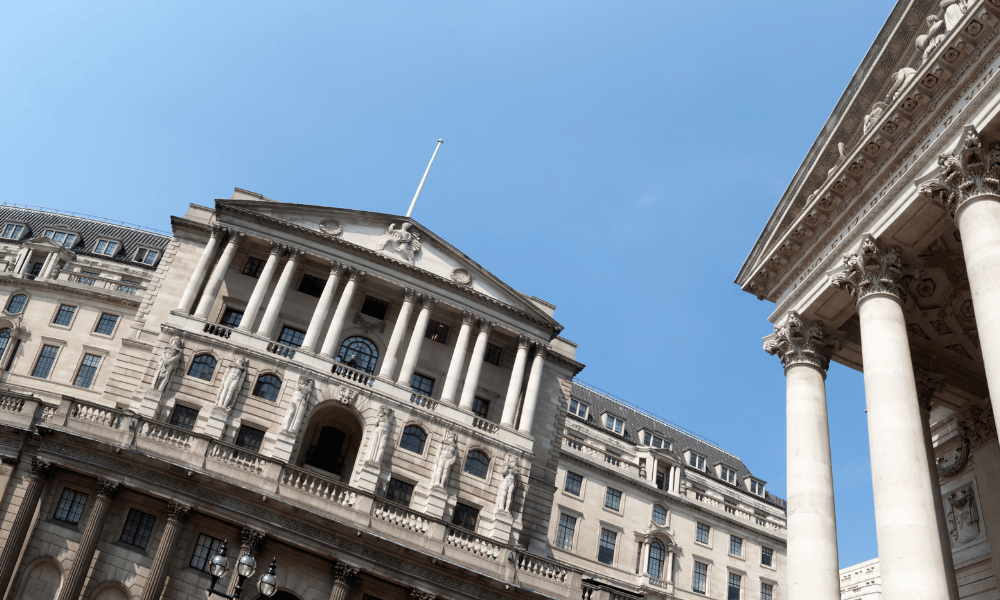
The Bank of England’s (BoE) Monetary Policy Committee (MPC) met today (Thursday 18th June) and announced its decision to hold the Base Rate at 3.75%.
This marks the fourth consecutive hold of 2026, following previous decisions in February, March and April. While today’s outcome had been widely anticipated by economists and financial markets, it comes against a backdrop of rising inflation expectations, higher energy prices and growing debate around whether further rate increases may still be required later in 2026.
The next MPC announcement is scheduled for Thursday 6th August 2026.
Why have the MPC decided to continue to hold the Base Rate?
The decision to hold the Base Rate at 3.75% reflects the MPC’s cautious approach as it balances recent improvements in inflation against concerns that inflationary pressures could increase again later this year.
The latest Consumer Price Index (CPI) data showed inflation fell from 3.3% in March to 2.8% in April. While this represents positive progress towards the Bank of England’s 2% target, inflation remains above target and price pressures are yet to be fully brought under control, causing policymakers to remain cautious.
The Bank of England’s latest Monetary Policy Report has also projected that inflation could rise again and peak at around 3.6% to 3.7% before gradually easing back towards its target. This suggests policymakers expect inflationary pressures to remain present throughout much of 2026, despite the recent fall in CPI.
Policymakers also remain concerned about external factors that could cause inflation to rise again. The ongoing conflict in the Middle East has increased uncertainty around global energy prices, while the Bank of England has warned that prolonged disruption to energy supplies through the Strait of Hormuz could push inflation significantly higher than currently forecast.
However, there are early signs that some of this pressure may begin to ease following the announcement of a potential US-Iran peace deal, which is expected to be signed on Friday 19th June and could allow the Strait of Hormuz to reopen.
While this is a positive development, uncertainty remains high. Many details of the agreement are yet to be finalised, and damage to oil infrastructure means it is likely to take time before supply fully recovers. The International Monetary Fund (IMF) has described the ceasefire as “welcome news”, but warned it remains on “high alert”, noting that any further disruption would pose a clear risk to global growth.
Alongside these global factors, services inflation and wage growth remain elevated, suggesting underlying domestic inflationary pressures have not yet fully eased.
Against this backdrop of inflation remaining above target, ongoing geopolitical uncertainty and continued domestic price pressures, the MPC has chosen to leave interest rates unchanged for now. However, with inflation expected to remain above the Bank’s 2% target and risks still present, some MPC members have indicated that further rate increases may still be necessary in 2026 if progress stalls.
Looking ahead, the outlook for future Base Rate movements remains uncertain and will continue to depend on how inflation, economic growth and wider global events develop over the coming months.
How will the Base Rate hold affect my mortgage?
For mortgage borrowers, today’s announcement means there will likely be no immediate change to monthly repayments as a direct result of the Base rate hold.
Tracker mortgages:
Borrowers on tracker mortgages linked directly to the Bank of England Base Rate will typically see no change to their monthly repayments while the Base Rate remains unchanged.
Variable-rate mortgages:
Those on standard variable rate (SVR) or other variable-rate mortgages are also unlikely to experience any immediate changes. However, lenders can review and adjust these rates independently, meaning they do not always move directly in line with Base Rate decisions.
Fixed-rate mortgages:
Borrowers on fixed-rate mortgages will see no short-term impact, as their interest rate will remain fixed until the end of their current deal. However, borrowers approaching the end of a fixed-rate period may find available rates are higher than those secured during the exceptionally low-interest rate environment of 2021, when the Base Rate stood at just 0.1% for much of that year.
Conversely, borrowers nearing the end of a two-year fixed-rate deal may find rates are lower than those available during parts of 2024, when Base Rate reached 5.25%.
What other factors influence mortgage rates?
While many lenders had already anticipated today’s decision, mortgage rates continue to be influenced by a range of factors beyond the Base Rate itself, including swap rates, inflation expectations, market sentiment and wider economic conditions.
As a result, while a Base Rate hold may provide some stability, it does not necessarily mean mortgage rates will remain unchanged or move directly in line with future Base Rate decisions.
What is the current outlook for the mortgage market?
The mortgage market remains competitive, with lenders continuing to offer a wide range of products for first-time buyers, home movers and remortgage customers.
However, mortgage rates may continue to fluctuate as lenders respond to changing economic conditions and expectations. While the Bank of England has held the Base Rate at 3.75%, fixed-rate mortgage pricing is influenced by a range of factors beyond the Base Rate alone. As a result, mortgage rates can still change even during periods where the Base Rate remains unchanged.
Recent data from our own clients highlights how rates have stabilised in the short term but remain elevated compared to earlier in the year. In May, the average rate secured for our clients was 4.97%, a slight improvement on April’s average of 4.99%. However, this remains significantly higher than March, when the average rate stood at 4.39%. This reflects the market’s sensitivity to changing expectations around inflation and interest rates, even during periods where the Base Rate itself is unchanged.
For borrowers planning a remortgage, home move or property purchase in the coming months, reviewing your options early can help ensure you are well positioned should market conditions change.
How can Cooper Associates Mortgages help?
Whether you are reviewing your current mortgage, approaching the end of a fixed-rate deal, planning a home move or stepping onto the property ladder for the first time, speaking with one of our expert advisers can help bring clarity in an uncertain interest rate environment.
Our award-winning mortgage advisers provide fee-free, bespoke, whole-of-market advice tailored to your personal circumstances, taking into account both your immediate borrowing needs and long-term financial goals. From your first conversation through to completion and beyond, we are here to help you navigate the mortgage market with confidence.
Our advisers continue to monitor rates on your behalf after a product has been secured. If a more competitive rate becomes available up to two weeks before completion, we will look to move you onto that rate where possible, helping ensure you benefit from improvements in the market.
If you would like to understand how the latest Base Rate decision could affect your mortgage plans, get in touch to book a fee-free, no-obligation consultation with one of our advisers today.